
Is AI character chat A Better Way To Enjoy Virtual Conversations?
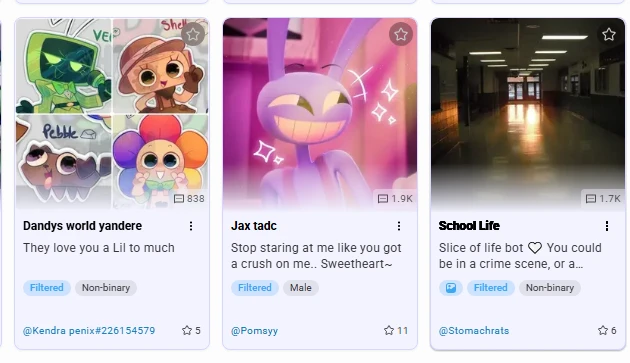
AI character chat may provide a more flexible and personalized way to enjoy virtual conversations because it combines natural language generation, personality design, and long-term interaction. By 2025, the global conversational AI market reached about $17 billion and is projected to approach $50 billion by 2031, showing strong demand for AI-based communication tools. Platforms focused on AI characters allow users to create fictional partners, storytelling companions, learning assistants, or role-play characters that respond differently according to user preferences. Unlike traditional chatbots with fixed answers, AI characters can maintain context, adjust tone, and create conversations that feel more interactive.
The growth of AI character chat comes from a change in how people use digital platforms. Earlier chat systems were mainly designed to provide information or complete simple tasks. Modern AI characters focus on conversation quality, personality, and continuous interaction. In 2022, large language models became widely available to consumers, allowing developers to build characters that could produce longer, more natural responses instead of short automated replies.
“A good virtual conversation is not only about receiving an answer. It is about having an interaction that matches the user’s expectations.”
AI character chat platforms have expanded because users often want different experiences from ordinary search engines or standard assistants. Some users want creative storytelling, while others use AI characters for language practice, entertainment, or casual conversations.
A 2025 analysis of AI companion platforms examined more than 100 services and found that users were increasingly engaging with systems designed around social interaction and personalized communication. The growth of this category shows that people are interested in conversations where the AI has a recognizable personality rather than acting as a simple information tool.
The main difference between AI character chat and traditional chatbots is the ability to create a consistent identity. A customer service chatbot usually has one purpose: answering questions. An AI character can have a background story, communication style, interests, and specific behavior patterns.
For example, a user can interact with a fantasy character that speaks in a fictional style, a study partner that explains difficult topics, or a virtual friend that remembers previous discussions. This type of design makes conversations more engaging because the user is interacting with a recognizable character rather than a generic system.
| Feature | Traditional chatbot | AI character chat |
|---|---|---|
| Main purpose | Information or service | Conversation and interaction |
| Personality | Limited | Customizable |
| Memory | Usually short-term | Often designed for longer interactions |
| User experience | Task-focused | Relationship and story-focused |
Personalization also changes the way users spend time with AI systems. Instead of opening a tool only when they need an answer, some users return because the conversation itself becomes the activity.
A 2025 study analyzing Character.AI interactions examined 2.1 million user-created prompts and showed how users build different types of AI characters based on interests, stories, and social interaction patterns. The results showed that AI character platforms are becoming a new type of online community where users not only talk with characters but also create characters for others.
This community aspect makes AI character chat different from many previous digital entertainment products. A user can design a character, share it, and allow thousands of other people to interact with the same creation. The experience becomes a combination of conversation, creativity, and entertainment.
Another reason AI character chat attracts users is emotional interaction. Human communication includes tone, encouragement, and personal expression. AI characters attempt to reproduce parts of these features through language models trained to recognize emotions and respond appropriately.
For example, when a user says they feel stressed before an important event, an AI character may provide encouragement, ask follow-up questions, or change its communication style. These responses are generated by algorithms, but the interaction can still feel more personal compared with a simple automated message.
A survey-based study involving 1,131 users and 4,363 conversation sessions examined how people interact with AI companions and found that users often turn to these systems for social interaction and personal expression. However, the research also showed that AI conversations do not fully replace human relationships, especially for users who need real social support.
The difference between AI interaction and human interaction remains important. AI characters can provide availability and personalized responses, but they do not experience emotions or build relationships in the same way humans do.
“AI characters can simulate understanding through language, but users still decide how much meaning they attach to the interaction.”
AI character chat is also becoming useful outside entertainment. Education is one area where personalized conversation can improve learning experiences. A language learner can practice speaking with an AI character that adjusts vocabulary level, corrects mistakes, and provides unlimited practice opportunities.
For creative industries, AI characters provide new methods for developing stories. Writers can test dialogue with fictional personalities before creating a final version. Game developers can use AI characters to create more flexible conversations where players influence the direction of a story.
The entertainment industry has also adopted AI character systems because interactive content often creates stronger user engagement than passive content. Instead of watching a character on a screen, users can participate in the conversation and influence what happens next.
Adult-oriented AI conversations have also become part of this market. Some platforms provide specialized character interactions, including romantic or mature role-play experiences. For example, services such as https://crushon.ai/ai-sex-chat focus on customized conversations with AI characters designed for adult users. This category has grown alongside broader AI companion services, but it also requires careful age controls and responsible design.
The convenience of AI character chat comes from its availability. Human conversations depend on schedules, locations, and social situations. AI characters can respond immediately at any time, allowing users to practice communication, explore ideas, or enjoy fictional scenarios whenever they want.
This feature is especially useful for people learning new skills. A student practicing a foreign language can repeat conversations many times without worrying about mistakes. A writer can explore different character personalities without needing another person to participate.
However, AI character chat also faces several challenges. One issue is accuracy. Even advanced AI models can generate incorrect information because they predict responses based on patterns rather than understanding facts like humans.
Privacy is another concern. Conversations with AI characters may include personal opinions, emotions, or private information. A 2025 Stanford analysis discussed concerns about how AI companies handle user conversations and highlighted the need for clearer privacy practices.
There are also concerns about excessive dependence. AI characters can provide entertainment and conversation, but users need to understand that these systems are digital products rather than real people. Maintaining a balance between online interaction and real-world relationships remains important.
Future AI character chat systems will likely combine language models with voice, images, and interactive environments. By 2030, many AI experiences may include realistic voices, animated avatars, and stronger memory features that allow characters to maintain longer conversations.
The development of AI character chat suggests that virtual conversations are becoming more personalized and interactive. Users are no longer only searching for information; they are exploring new ways to communicate, create, and experience stories.
AI character chat offers a different type of digital conversation by combining technology with personality-based interaction. It cannot replace human relationships, but it provides new possibilities for entertainment, education, creativity, and personal expression. As AI technology improves, virtual conversations may become a regular part of how people communicate online.
Join 3.2 million readers
Daily editorial galleries, delivered fresh each morning.
Hand-picked portraits, biographical features and cultural dispatches from Budapest — free, ad-light, and curated since 2009.
Enter the Gallery